Bal Masqué, op.22 – Amy Marcy Cheney Beach
Symphony No.8 (Unfinished) – Franz Schubert
Symphony No.2, B minor (Bogatirskaya simfoniya; Heroic Symphony) – Alexander Borodin
Bal Masqué, op.22 – Amy Marcy Cheney Beach
Symphony No.8 (Unfinished) – Franz Schubert
Symphony No.2, B minor (Bogatirskaya simfoniya; Heroic Symphony) – Alexander Borodin
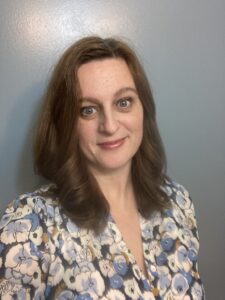
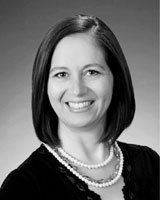
On behalf of the Board of Directors of the Ashland Symphony Orchestra, welcome to our 56th season! I feel such warmth and pride that our small town supports a professional symphony orchestra. The ASO is truly a gem of our community, sharing the joy of orchestral music with people of all ages and backgrounds. Our Grammy-award winning Music Director and Conductor Michael Repper and the talented professional musicians of the ASO have created another incredible season for your enjoyment. We are eager for you to hear the beautiful, powerful, soul-filling music that they have prepared for you. Meanwhile, our Executive Director Martha Buckner continues to provide innovative opportunities, such as the ASO Fan Club, that support the development of young musicians throughout Ashland County and beyond. I am deeply thankful to our musicians, staff, board members, and supporters for making this season possible. And to our patrons, please know that your presence at ASO performances means so much! Whether you are joining us for a pops concert, a concert in our Saturday night subscription series, or one of our concerts presented especially for young people, your attendance lifts up the ASO. Thank you for choosing to spend your time with us!
Diane Bonfiglio, Ph.D.
President, ASO Board of Directors
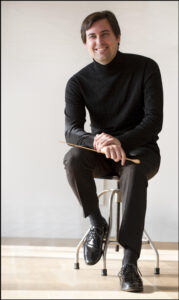
Dear Friends,
Welcome to the Ashland Symphony Orchestra’s 2025–2026 season! It is a joy and an honor to continue this musical journey with you as your Music Director.
This year, we invite you to come aboard for a season of imagination, discovery, and connection—a musical journey that takes flight and carries us to every corner of the world. Like a great plane ride full of wonder and anticipation, each concert is a stop on a global adventure. You’ll hear the brilliance of Beethoven, the soul of Coleridge-Taylor, the energy of Jessie Montgomery, the lyricism of Schubert, the fervor of Borodin, and so much more. These works, drawn from across time and cultures, remind us that music is a language that speaks to the heart.
One of the highlights of our season is a groundbreaking spring concert that reflects our deep commitment to community and innovation. In partnership with Goldberry’s Coffee, we’ll combine music with global storytelling and curated coffee tastings—an immersive, sensory celebration that brings people together in a truly unique way. This collaboration is one of many ways we continue to grow as a vibrant cultural hub in Ashland and beyond.
Whether you’ve been with us for years or are joining us for the first time, your presence is what gives our music life. Thank you for supporting live orchestral music and for being a vital part of our ASO family.
I look forward to sharing the season with you—and to welcoming you on this musical adventure.
With warmest regards,
Michael Repper
Music Director
Ashland Symphony Orchestra
Executive Director’s Message
I am thrilled to have you join us on our ‘round the world tour of classical music! From the old masters to the new trailblazing composers, the musicians of the ASO will bring the pieces to life.
Hanna Strickland, ASO Administrative Assistant, and I had great fun creating the theme of “Your Passport to Great Music” and naming the concerts, and we hope you enjoy the journey.
The $100,000 challenge set forth by Bob and Jan Archer was met and they have established a new $1 million endowment to benefit the ASO. My challenge to you is to invite friends and family to each of the concerts this season.
Sit back, relax, and enjoy the flight!
Martha Buckner, Executive Director
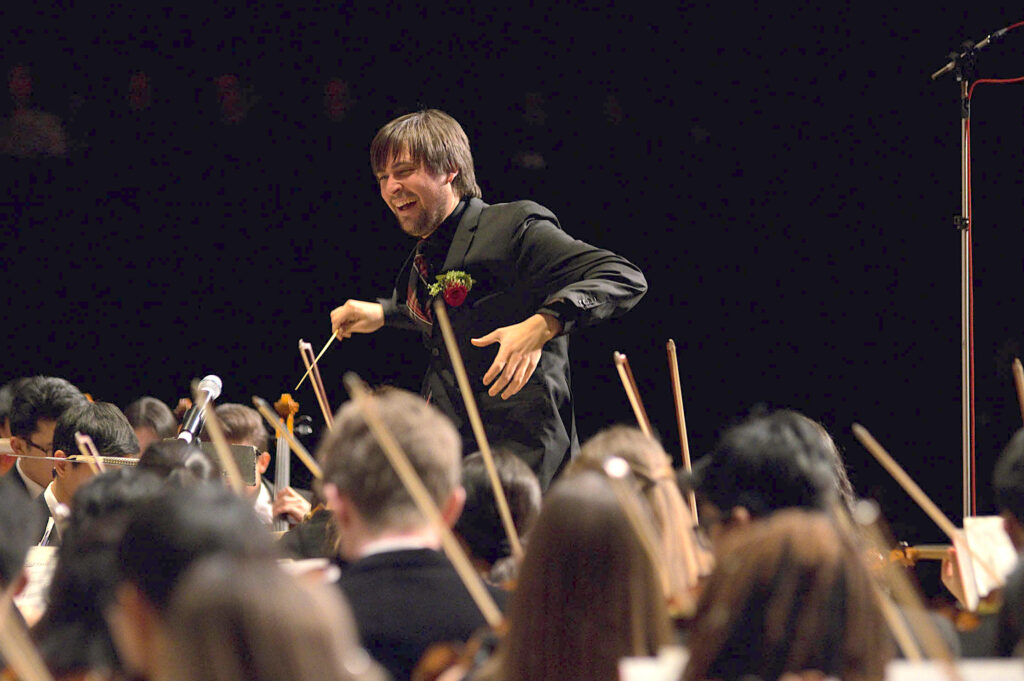 Conductor Michael Repper’s work spans six continents. In 2023, he became the youngest North American conductor to win a Grammy® Award in Best Orchestral Performance. He has an international reputation for engaging and exciting audiences of all spectrums, and for promoting new and diverse musical talents.
Repper is currently the Music Director of the Ashland Symphony Orchestra, Mid-Atlantic Symphony Orchestra, and the Northern Neck Orchestra of Virginia. He recently concluded tenures as Music Director of the New York Youth Symphony at Carnegie Hall, and as Principal Conductor of Sinfonía por el Perú, the elite youth orchestras and choruses of one of South America’s most versatile social impact music programs. Repper was the Baltimore Symphony Orchestra Conducting Fellow for two seasons, and he served as the BSO’s New Music Consultant. Recognizing his success at these ensembles, and his growing profile as a guest conductor all over the world, Repper was awarded a Solti Foundation US Career Assistance Award in 2020, 2021, 2022, and 2023.
His album with the New York Youth Symphony, which features debut recordings of works by Florence Price, Jessie Montgomery, and Valerie Coleman, achieved widespread critical acclaim, reached #1 on the Billboard Chart, and won a Grammy® Award, marking the first time a youth orchestra achieved this milestone.
Repper has collaborated on large-scale productions of symphonic and theatrical works with the Weill Music Institute at Carnegie Hall, the Chicago Symphony Orchestra, Ravinia Festival, Peabody Institute of Music, and the New School of Music, among others. An avid pianist, he regularly performs as a soloist alongside his orchestras.
Alongside the standard repertoire, Repper is especially invested in programming new music and showcasing fresh talent. His ensembles have performed dozens of world premieres and pursued innovative commissions, as well as a variety of Carnegie Hall premieres from established and emerging composers.
His experience with choruses has been recognized with significant positions, including his tenure as the Music Director at the Baltimore Basilica, the first Catholic Cathedral in the United States. Internationally, Repper has performed with highly regarded ensembles and in the world’s greatest venues, including the São Paulo Symphony, and at the Palau de la Musica in Barcelona, Carnegie Hall, and others.
His discography includes the aforementioned album of music with the New York Youth Symphony, alongside an album with the Grammy®-Nominated Metropolis Ensemble and Grammy®-Winning Brooklyn Youth Chorus (“Musical America”), and several with the Peabody Institute as an Assistant Conductor. With the New York Youth Symphony during the Coronavirus pandemic, he was one of the first to pioneer the practice of distanced orchestral performance videos, and he made two performance appearances on CNN, the final one with Platinum-Artist Billy Ray Cyrus.
Repper complements his work with professional orchestras with a firm commitment to education, and travels worldwide to work with ensembles of young musicians. As Artistic Director of the Chamber Music Society of Maryland, he ushered in a slate of innovative educational programming, such as the Reinecke Youth Chamber Music Scholarship and Fellowship Program. He has conducted several masterclasses for orchestras from all over the United States on behalf of the New York Philharmonic, and conducts side-by-side and educational concerts with major orchestras, including the Baltimore Symphony, the Colorado Symphony, and the Sarasota Orchestra.
Repper’s most influential conducting mentors are Marin Alsop and the late Gustav Meier. He believes that a conductor’s main role is to connect people and to use performance as a vehicle for positive change. He aims to promote a diverse and inclusive future for the arts, and to pay forward the passion for community that his mentors demonstrated to him.
Amy Marcy Cheney BEACH [b. 1867, d. 1944, American]
Bal Masqué, op.22 <1893>
Instrumentation: flutes, piccolo, oboes, clarients, bassoons, horns, trumpets, timpani, percussion, harp, and strings
Duration: 5 minutes
Amy Beach was a remarkable woman by any measure. Without doubt she was this country’s first woman to have carved out an acclaimed musical career that equaled that of any important American male musician, and transcended most. She enjoyed a noteworthy life as a piano virtuoso, composer, and influential leader in music education, public music advocacy, and music journalism. But it was as a prolific and highly respected composer of the first water that she made her historical mark in American classical music. Simply put, she was our county’s first outstanding female composer. At the time of her early years, American classical music was still very much simply an outpost of Europe, European musicians, and European musical traditions. Our symphony orchestras were populated largely by Germans, French, and Italians and musical composition by American composers was in its infancy. A group centered around Boston and Harvard University, known later as the “Second New England School,” constituted the country’s initial efforts as an independent, internationally respected thrust in serious music composition. The names are still familiar to many (but mostly to musicians): George Chadwick, John Knowles Paine, Arthur Foote, Edward McDowell, and Horatio Parker. And in this all-male list of names is that of Amy Beach. Moreover, her membership was acknowledged in the contemporary stuffy times of Boston! While the music critics and pundits of those times characteristically simply could not resist couching much of their responses to her work in gender-obsessed language, they never doubted her brilliance and talent. She was, perhaps grudging, acknowledged as “one of the boys.”
The details of her life, living as she did in public scrutiny, are well known. But even under today’s close examination, she doesn’t fit any of our contemporary clichés and memes of cultural, political, and gender wars. On the one hand she seems to have been stultified by nineteenth-century mores, social conventions, and marital norms. On the other she refused to see herself as constrained and repressed. She may have been a pioneer in championing women’s pursuit of equality, but she was by today’s standards a decided conservative. She always voted Republican, hated FDR, happily went by the name of her husband on her published compositions (Mrs. HHA Beach), dallied with admiration of Mussolini during her Italian sojourn, and other than her determined efforts for musical equality, was not a poster child for liberal causes.
Amy Cheney was born in 1867 in a very small town near the center of New Hampshire, and her astounding musical talents were evident almost from the beginning. Obviously a prodigy, she was singing songs at the age of one, composing for the piano (without its aid) at four, and in general demonstrating amazing musical feats before most children could talk. Her formal study of piano started early, and she soon was performing in public concerts. But her musical studies were centered around her home—all her life her family insisted upon a more or less protected atmosphere. Even after they moved closer to Boston to further her studies, it was not in a conservatory. As Amy gained more and more of a public reputation, her parents stoutly resisted her move into a larger music circle. In a time when almost all talented Americans went abroad for advanced study, Amy stayed home. And it was always to be. She is one of the few significant composers that were largely autodidacts. She read, studied scores, and translated important musical treatises and texts; she absorbed it all.
Her prowess as a performer led to a triumphal concert with the Boston Symphony in 1885, when she was eighteen. But she married a distinguished surgeon twenty-five years her senior right after that and her active career as a performer ended. True to the times and his social class her husband forbade her to perform actively anymore, and to stay home and lead a proper life as a woman of high social status. He did encourage her to compose, and she most certainly did. But she later said that these years were happy ones. While the great majority of her life’s work were art songs and chamber music, three large works from the 1890s were highly praised: the Mass (1892), the Gaelic Symphony (1896), and the Piano Concerto (1899). Unlike so many women composers, she never endured obscurity—the Mass was premièred by the prestigious Boston Handel and Haydn Society, and both the symphony and piano concerto by the Boston Symphony Orchestra. All of these works met with wide and enthusiastic approbation in spite of most pundits’ silly twaddling over her gender.
While the mass, symphony, concerto and chamber music were highly praised works of gravitas, like most accomplished composers, she had a lighter side, as well. The Bal masqué is clear evidence of that. Written in 1893, originally for solo piano—an early work in that genre–it is a charming waltz in the best of the salon tradition. Later, it was artfully scored for full orchestra by the composer.
–Wm. E. Runyan
©2022 William E. Runyan
Franz SCHUBERT [b. 1797, d. 1828, Austrian]
Symphony No.8, D.759, B minor (Unfinished) <1822>
Instrumentation: flutes, oboes, clarinets, bassoons, horns, trumpets, trombones, timpani, strings
Duration: 25 minutes
The epitaph on Schubert’s tombstone reads: “The art of music has entombed here a rich treasure but even fairer hopes.” We all lament the “loss” of treasure that we never possessed, none perhaps more than great art that we presume may have come to pass but not for lives cut short in youth. We must remember that not all composers can live long productive lives like those enjoyed by Verdi and Strauss, for example. Often those who die young are nevertheless privileged to accomplish much, and Schubert, like Mozart, is exemplary. His short life was generally uneventful, and his personality still is somewhat lacking in vivid details for us today, but we do know that he lived and worked within a small circle of artists in various fields in Vienna. His was contemporaneous with Beethoven, but that master’s music exerted little influence upon Schubert; Haydn and Mozart were his models.
Franz Schubert’s short life roughly coincided with that of Beethoven’s—both passing away within about a year of each other. But what a difference there is between the life and music of these two giants of early romantic music! Beethoven–world renowned with fiery temperament, and master of struggling to hammer out profundities from modest ideas—strode across the musical landscape of Europe as a conqueror. Schubert, on the other hand, lived quietly within a circle of close friends, rarely capturing the public’s imagination, while turning out an immeasurable wealth of melodies, apparently with little effort. In his brief career Schubert composed orchestral music, dabbled in opera, produced masterpieces of chamber music, and created a significant body of compositions for piano. But his glory, and the world’s musical treasure, lies in his Lieder (German songs). It is astounding that he composed over six hundred of them, and they constitute the defining repertory within that genre. No one else—not Schumann, Brahms, Wolf, Strauss, nor Mahler—come close to the defining mark of Schubert. Almost single handedly he created the first masterpieces of German song, and so many, at that. They are constituted of marvelously imaginative piano accompaniments (which are really equal in importance to the vocal part); innovative harmonies; poetic texts of high artist quality; and an unprecedented gift for an endless variety of exquisite melodies. And it is an understanding and appreciation of the centrality of song in Schubert’s oeuvre that informs our encounter with his instrumental music, including his symphonies.
He wrote nine symphonies, but two of them have garnered the most prominence: The “Great C Major” symphony and the “Unfinished.” Many have claimed that the latter really is “finished,” (owing to its genius), and many others have actually finished it (Fools rush in . . .) by composing the missing last two movements in Schubert’s style. But, manifestly it is unfinished, but of such gripping quality and beauty that it really doesn’t matter. Ironically, it did not meet the light of day (literally) until 1865, when it was retrieved, almost as an afterthought, from an obscure personality’s desk drawer. Schubert never heard any of his symphonies played by a professional orchestra, and none of them were published in his lifetime. Yet, here is an iconic work of early Romanticism that lay undisturbed almost from the time of its composition in 1822. In many respects it manifests most of the technical characteristics (and I won’t bother you with those) of late Classical symphonies such as those of late Haydn and Mozart, and perhaps early Beethoven. The essence of this great work is more elusive: its dark and reflective tone, its stunning and novel combinations of subtle instrumental color, the characteristic and striking harmonic language—and, of course, the Schubertian melodies. Technical points pale beside these qualities—the “Unfinished” opens a new atmospheric sound world of Romanticism that is palpable beyond analysis.
–Wm. E. Runyan
© 2015 Wm. E. Runyan
Alexander BORODIN [b. 1833, d. 1887, Russian]
Symphony No.2, B minor (Bogartirskaya simfoniya; Heroic Symphony) <1869-1875>
I. Allegro
II. Scherzo: Prestissimo
III. Andante
IV. Finale: Allegro
Instrumentation: flutes, piccolo, oboes, English horn, clarinets, bassoons, horns, trumpets, trombones, tuba, timpani, percussion, harp, strings
Duration: 33 minutes
Symphony No. 2 (Borodin) by Alexander Borodin is inseparable from the extraordinary dual life of its creator. Unlike most major composers of the 19th century, Borodin was not primarily a musician but a distinguished scientist. A professor of chemistry at the Imperial Medical-Surgical Academy in St. Petersburg, he made meaningful contributions to organic chemistry, including early work on aldehydes and what would later be known as the Aldol reaction. By all accounts, he regarded composition as a secondary pursuit, famously referring to himself as a “Sunday composer.”
This divided life profoundly shaped the creation of the symphony. Composed between 1869 and 1876, the work progressed in fits and starts, often delayed by teaching responsibilities, laboratory research, and administrative duties. Borodin’s colleagues in The Mighty Handful, particularly Nikolai Rimsky-Korsakov, recalled that he would sometimes leave a rehearsal or musical gathering abruptly to attend to chemical experiments, or the reverse. The slow pace of composition was not due to lack of inspiration, but rather the scarcity of uninterrupted time.
Yet this scientific discipline arguably contributed to the symphony’s structural integrity. Borodin’s approach to form is notably economical. Themes are often built from concise, clearly defined motifs that are developed with an almost experimental logic. The first movement’s block-like construction and the scherzo’s intricate rhythmic design suggest a mind attuned to precision and balance, even as the music projects an image of spontaneity and epic breadth.
At the same time, Borodin’s musical voice is anything but clinical. The Andante reveals a deeply lyrical sensibility, with melodies that unfold as naturally as vocal lines, perhaps reflecting the contrast between his rigorous professional life and his artistic imagination. The finale, with its vibrant, dance-like energy, brings together these dual impulses. It is carefully constructed yet exuberantly expressive.
Borodin’s life was also marked by a broader humanistic outlook. He was a passionate advocate for education, particularly for women, helping to establish medical courses for female students in Russia. This commitment to intellectual and social progress mirrors the cultural ambitions of his musical circle, which sought to create a distinctly Russian art that could stand alongside Western European traditions.
In this light, Symphony No. 2 emerges not only as a portrait of heroic Russia, but also as a testament to Borodin himself, a composer and scientist whose rare balance of intellect and imagination produced music of enduring power and individuality.
–Michael Repper
Samuel Rotberg, Concertmaster
James E. Thomas Endowed Chair
Jane Reed
Mary Ann Basinger
Cassandra Kalin
Kia-Hui Tan
Krista Solars
Jocelyn Taylor
Ruoyao Li
Mary Kettering, Principal
Ania Kolodey
Wanda Sobieska
Michael Sieberg
Melina Skidmore
Frances Hamilton
Eva Mondragón, Principal
Joshua Bowman
Lee Wilkinson
Geoffrey Fischer
Christopher DeShields
Jeffrey Singler, Principal
Matthew Rhee
Aidan Sullivan
David Londoño
Rosa Balderrama
Sam Wagner
Bryan Thomas, Principal
Alexander Shinn
Dan Conwell
Lisa Jelle, Principal
Carol Oberholtzer
John H. Landrum Endowed Chair
Denise Rotavera-Krain
Andria Hoy, Principal
Stefanie Minter, English horn
Thomas Reed, Principal
Gail Zugger
Ian Hoy, Principal
Zachary Elmore
Laura Makara, Principal
Michael Metcalf, Assistant Principal
Timothy Stewart
Benjamin Hottensmith
Jason Riberdy
Kenneth Holzworth, Principal
Ted Clark
Michael Grady, Principal
Brian Griffin
Charles Bradley II
Charles Kobb, Principal
Kirk Georgia, Principal
Torrell Moss, Principal
Lawrence and Catherine Hiner Endowed Chair
Brian Bennett
Kaden Smutz
Nancy Paterson, Principal
Our ushers and volunteers
Ashland High School staff for technical support
Ashland City Schools for its continued support of the Arts
Roger Price, Professional Voice Actor & Announcer https://rogerzvoice.com/
Hanna Strickland, Administrative Assistant
Seth Morrison, Stage Manager
Bryce Bishop, Assistant Stage Manager
Deken Foster, Stage Manager
Jen Burford, House Manager
Please silence all electronic devices.
No flash photography or audio/visual recording permitted.
No food or drink permitted in the Robert M. & Janet L. Archer Auditorium.
 Music Sponsor – Armordyne Computer Solutions
The individuals and associations listed on this page, by their support of the orchestra’s operating fund, make possible the continuance of the Ashland Symphony Orchestra. Additional support is needed and will be most welcome at any time throughout the year. If there is an error, please notify the office. Donations listed as of 04/09/2026.
Celebrate A Birthday! Welcome A New Neighbor! Honor A Memory! Celebrate A Promotion!
The Ashland Symphony will recognize the people or events in your life with a letter that you have donated in their honor to the Ashland Symphony Orchestra. Please send us that person’s name, address and the event along with your donation and we will send a personalized note acknowledging your thoughtfulness along with the printed celebration text in the upcoming program. Call 419-289-5115 for more information.
‡Sponsor – sponsorships are still available for this season. Call 419-289-5115.
*Additional gift given to the Change for Music Education Campaign
Pacesetters – patrons who pledged on or before July 31, 2023 are indicated in bold.
Name in italics – increased pledge by at least 10%
NAME IN ALL CAPS – increased pledge to move up to a new giving level
Robert M. and Janet L. Archer‡
Ashland County Community Foundation
Ashland University, in-kind support
ASO Podium Endowment Fund in Honor of Maestro Arie Lipsky est. 2018
The Dean and Joan Bartosic Fund (ACCF)
STAN AND DIANA BRECHBUHLER
Jim and Barb Chandler‡
Hugo H. and Mabel B. Young Foundation
Vicky Lippert
Loudonville Theatre and Arts Committee
Ohio Arts Council
The Elizabeth Pastor Fund (ACCF)
Samaritan Hospital Foundation‡
CHARLES AND PEGGY ULRICH
Anonymous
Campbell’s Corporation in honor of Kayla Selan
The John R. Donelson Fund (ACCF)
GRANDPA’S CHEESEBARN & SWEETIES CHOCOLATES‡
MICHAEL AND SEIKO HUPFER
David Kowalka
Susan Lime
SUELLEN McBURNEY
Loudonville Theatre & Arts Committee‡
JOHN AND DIANE PAULSON‡
ALAN AND MARJORIE POORMAN
Trinity Lutheran Church – Rybolt Fund‡
Dr. JoAnn Ford Watson*
Ashland City Schools‡
ASO Rev. John H. Landrum Memorial Endowed Chair for Flute 2 est. 2020
ASO Fund in Memorium of James E. Thomas est. 1999
Forrest Conrad
JAMES AND KRISTI CUTRIGHT
Denbow-Gasche Funeral Home & Crematory with onsite reception center‡
Thomas and Kristie Donelson‡
BETTI AND JOHN FRAAS
Barbara Glenn
CATHERINE HINER
Antonio and Karen Marallo
TOM AND MARY McNAULL*
OneTable Strategy
Ken Seidner and Dr. Lorena Surber
JOHN AND DANA SHERBURNE*
JOHN AND JEANIE SHULTZ
SPRENG-SMITH AGENCY‡
The J. Robert and Ruth L. Tipton Fund (ACCF)
BCU Electric‡
Charles and Melody Barnes
The Dr. Beverly M. Bixler Fund (ACCF)
JEFF AND DIANE BONFIGLIO‡
MARTHA BUCKNER
ANGIE AND ADAM CIRONE
TIM AND ANNE COWEN
Jean Dierks
Germain Honda of College Hills
Ann K Guthrie: In honor of Arie Lipsky in gratitude for his leadership and talents.
The Ann K Guthrie Endowment Fund (ACCF)
Bud and Cuda Ingmand
FRED LAVENDER
The Nancy Kopp Fund (ACCF)
KEVIN AND CAROL OBERHOLTZER
Packaging Corporation of America‡
Peace Evangelical Lutheran Church‡
Dr. Jon Parrish Peede and Rev. Nancy Hollomon-Peede
PATRICIA PEREZ
JANE ROLAND
MICHAEL AND DEBORAH SULLIVAN
Allan and Mary-Rose Andersen
Ron and Lisa Blackley
John and Lori Byron
The Billy M. Harris Fund (ACCF)
The Arie Lipsky Honorary Endowment Fund ℅ Ann Guthrie (ACCF)
Ron and Carolyn Marenchin‡
Bob and Jane Roblin*
Thomas and Jane Reed
Bill and Chris Strine
Dr. Stephen and Peggy Yoder*
Armodyne Computer Solutions‡
Ashland Dental Associates
ASO Harold Weller Music Education Endowment Fund est. 2019
Baker Bowman & Co.
Mary Ball
Sandra Bally
Bella’s 220
Doug and Susan Blake
Ted and Patricia Byerly
The Mary M. Case Memorial Fund (ACCF)
Charles River Laboratories
Coldwell Banker Ward Real Estate
Robert and Jan Cyders
Ray and Cherie Dever
Donald Earlenbaugh
Explore Ashland
MIMI AND JOHN FERNYAK
Fulmer Farms
The Dr. Alvin W. Garrett Fund (ACCF)
BETTY GARRETT
Ed and Karen Grose
Louise E. Hamel
GARY AND CHERYL HILDEBRAND
The Lawrence and Catherine Hiner Endowed Chair for Percussion (ACCF)
Jan W. and Sharon Howe
Irwin & Associates, CPA’s
Jersey Mike’s PS Subs LLC
Loretha Kline
Charles Kobb
TOM AND MARILYN KOOP
Ron and Barb Leddy
Mechanics Bank‡
Lighthouse Wealth Management
John and Donna Rae Maiken
Dann and Connie Marble
Mel McKeachie and Melody Snure
Miller’s Hawkins
Ken and Sheila Milligan
Larry and Diane Moretz
Pam and Mike Mowry
DAN AND LISA PETERSON
LANA M. POTTER
BARB QUEER
Brittany Reep ℅ ACCF Staff Grants Program
Ken Rinehart and Barb Schmidt-Rinehart
The William and Marlene Rose Fund (ACCF)
Gordon and Jane Ruggles
Deborah Seaman*
D.R. and C.L. Sedwick
Sarah Shepherd
Eric and Melissa Sponseller
Dorothy Stratton*
MICHAEL AND NANCY UDOLPH
Scott and Ann VanScoy
Cora Walker
Sterling Ward
The Dr. JoAnn Ford Watson Fund (ACCF)
Russell and Jan Weaver
Whitcomb & Hess CPAs & Financial Advisors
SUSAN WHITTED
Women’s Philharmonic Advocacy‡
Tim and Linda Workman
Abbott Laboratories
Advantage Marketing, Inc.
Lucy Amsbaugh
Myron and Carolyn Amstutz
Ashland Noon Lions
Diane Bachtel
Buehler’s Fresh Foods – poinsettias
Polly Chandler (Amicae Per Annos)
Joe and Pat Denbow
Janice Eitelgeorge
Janice Fridline
John Giglio/In Tune Piano
Kelly Gregg (Fiel Foundation) in honor of Michael Repper
Susan Gregg and the late Dr. Robert Gregg
Jan Hamilton
Henry N. Hiner
Johnson Controls
LAW OFFICE OF ANDREW BUSH
Robert and Shirley Matz
R. Lee and Marianne Mowry
Roger Price
Tom and Diane Rohr
Robin Ryland
St. Matthew’s Episcopal Church
David and Marjorie Seiss
Ralph and Betty Jo Tomassi
Jenny Whitmore
Anonymous
The Robert M. and Janet L. Archer Fund (ACCF)
Elizabeth Arnold
Ashland Musical Club
Tim and Laura Baker
John Bates
Jennifer Beckwith (Amicae Per Annos)
Patricia Saunders and Soren Brauner
Brethren Care Village
Suzanne Carruthers (Amicae Per Annos)
Barb Chandler (Amicae Per Annos)
Maryanne Chengelis
Madeline Cole
Freda Cook
Denny and Polly Davis
Cara Dziak/Rosewood Music Studio
Bonnie Graves
David and Debby Gray*
Robert Groenke
Gene and Jan Haberman
FRANCES HAMILTON
Tom and Chris Herron
Pamela Hinton
Stan and Joyce Hunt
Bob and Colleen Jackson
Unie Kettering
Barb Leddy (Amicae Per Annos)
Vicky Lipper (Amicae Per Annos)
Arie Lipsky
Josiah Mason
John and Laurie Maurer
Maurer Photography
Rita McElfresh (Amicae Per Annos)
Bonnie McGee (Amicae Per Annos)
Tom and Bonnie McGee
GAYLORD AND CAROL MEININGER
Mental Health and Recovery Board of Ashland County‡
Lucille Nuss (Amicae Per Annos)
PATRICIA PECK
Patricia Perez (Amicae Per Annos)
Lee and Dawn Peters
Karen Reaume
Michael Repper
Paul and Barbara Schantz
S. Kris Simpson
Jack and Nancy Smith
Rev. And Tom and Kitty Snyder
Glen and Judy Stewart
Brenda Uselton (Amicae Per Annos)
Dr. JoAnn Ford Watson (Amicae Per Annos)
Steven and Marla Willeke
Douglas and Rebecca Abel
Teresa Durbin-Ames and Larry Ames
Mary Ann Basinger in memory of Bob Gregg
Anne Beer (Amicae Per Annos)
Diana Brechbuhler (Amicae Per Annos)
Sheryl Budd (Amicae Per Annos)
Starr Dobush
Sandy Enderby (Amicae Per Annos)
Debby Gray (Amicae Per Annos)
Steve and Melanie Huber
Darcie Gilbert and Chris Koch*
Carl and Sandra Leedy
Connie Marble (Amicae Per Annos)
Deann Markle
Gayle Marie Martin (Amicae Per Annos)
Alice L. Metcalf
Nicole Paradis
Christopher and Linda Swanson
Nancy Udolph (Amicae Per Annos)
In 1997, Bob and Jan Archer established the first donor fund through the Ashland County Community Foundation to benefit the Ashland Symphony Orchestra. The ASO then partnered with the ACCF in 1999 and created the “Ashland Symphony Orchestra Fund in Memorium of James E. Thomas”. Since then, three new agency funds and fourteen additional donor advised or designated funds have been established! The Ashland County Community Foundation can assist you in creating a fund to benefit the Ashland Symphony Orchestra now or as part of your estate plan. For more information, call the Foundation at 419-281-4733.
Donations may be made to existing endowments at any time. Contact the Foundation for more information www.ashlandforgood.org.
*To contribute to these funds, please send donation to Ashland Symphony Orchestra, 401 College Ave., Ashland, OH 44805.
Robert M. & Janet L. Archer Fund est. 1997 and 2025
Ashland Symphony Orchestra Fund in Memorium of James E. Thomas est. 1999*
ASO Podium Endowment Fund in Honor of Maestro Arie Lipsky est. 2018*
ASO Harold Weller Music Education Endowment Fund est. 2019*
gift from Nick & Edna Weller Charities: Harold & Betsy Weller and Thomas Weller
ASO Rev. John H. Landrum Memorial Endowed Chair for Flute 2 est. 2020*
gift from Marybelle H. Landrum
Ashland Symphony Orchestra est. 2000
Mary M. Case Memorial Fund est. 2005
Ann K. Guthrie Fund est. 2009
Arie Lipsky Honorary Endowment Fund est. 2010
Kopp Family Fund est. 2011
Dr. Alvin W. Garrett Fund est. 2017
William and Marlene Rose Fund est. 2017
J. Robert and Ruth L. Tipton Fund est. 2017
Dr. JoAnn Ford Watson Fund est. 2017
Dr. Beverly Bixler Fund est. 2018
Billy Harris Charitable Fund est. 2018
Lawrence and Catherine Hiner Endowed Chair for Percussion of the ASO Fund est. 2020
John R. Donelson for the benefit of the ASO est. 2021
Elizabeth Pastor Fund for the benefit of the ASO est. 2021
F. Dean and Joan Bartosic Family Fund for the benefit of the ASO est. 2023
Julia A. Wright Fund for the benefit of the ASO est. 2025
Martha Landrum Buckner Fund for the benefit of the ASO est. 2025